
Spa Chemicals For Beginners
You wouldn’t swim in a bathtub that hasn’t been cleaned — so why swim in an untreated pool? Without the right chemicals, pool water can quickly become a breeding ground for bacteria, algae, and contaminants that affect both your health and your pool’s surfaces. The good news? Pool chemistry doesn’t have to be complicated. Once you understand the basics and follow the correct order, maintaining clean, safe water becomes part of an easy routine. Let’s break it down.

Spa Chemicals: The Basics
Before adding any chemicals to your fibreglass spa, you’ll need to test your water. You’ll want a good supply of test strips, and for more accurate results, you can use a liquid test kit. Once you have your baseline readings, you can start adding your chemicals. (If you need to, you can always take a water sample to your local pool store if you want to test your water source for metals or other minerals.)
Adding the right chemicals in the right order can prevent cloudy water, slimy surfaces, and nasty spa smells. If it’s the first time you’re starting up your spa, it will be extra important to add your chemicals in the correct sequence.
Recommended Water Levels
Keeping your pool within these ranges helps your chemicals work effectively and keeps swimmers comfortable:
pH: 7.2 – 7.6
Total Alkalinity: 80 – 120 ppm
Free Chlorine: 1 – 3 ppm
Calcium Hardness: 200 – 400 ppm (fibreglass pools typically sit at the lower end)

How To Add Chemicals To Your Spa
Handling pool chemicals correctly is just as important as adding the right ones. Taking a few simple safety precautions protects you, your equipment, and your pool water from unnecessary damage. Before you begin, always read the instructions on each product and follow these essential safety guidelines.
Personal Safety
Wear gloves and eye protection when handling pool chemicals
Avoid breathing in fumes or dust — stand upwind when adding chemicals
Never handle chemicals with wet hands
Measuring and Handling Chemicals
Always measure chemicals carefully using the manufacturer’s guidelines — never guess
Never mix chemicals together, either dry or wet, as this can cause dangerous reactions
Add chemicals to water, never water to chemicals
Use clean, dry scoops for each product to prevent cross-contamination
Adding Chemicals to Your Pool
Add chemicals one at a time, directly to the pool water
Keep the pump running to help chemicals disperse evenly
Allow at least 20 minutes of circulation between each chemical addition
Ensure each chemical is fully dissolved before adding the next
After adding the chemicals, leave the pool uncovered where possible to allow gases to disperse
Note: Always wait until chemicals have fully circulated and water levels are within the recommended range before swimming
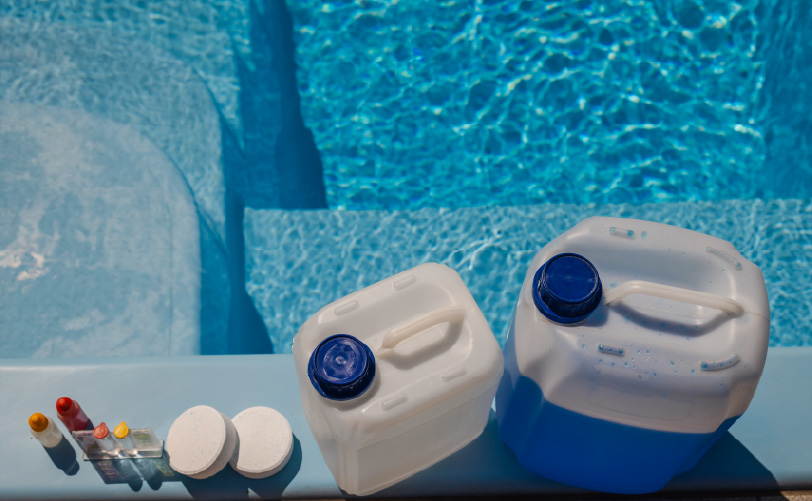
A Step-By-Step Sequence To Pool Chemicals
Adding pool chemicals in the correct order is just as important as using the right products. Following this step-by-step sequence helps ensure your chemicals work effectively, prevents water balance issues, and keeps your pool safe and comfortable.
✅ Step 1
Add Metal Sequestrant Or Stain Preventer If Necessary
If your water source contains metals such as iron or copper, add a metal sequestrant before any other chemicals. This binds and neutralises metals in the water, preventing staining, cloudy water, and damage to spa surfaces and equipment. It’s especially important when filling from bore water, tank water, or older plumbing systems.
✅ Step 2
Adjust Alkalinity And pH
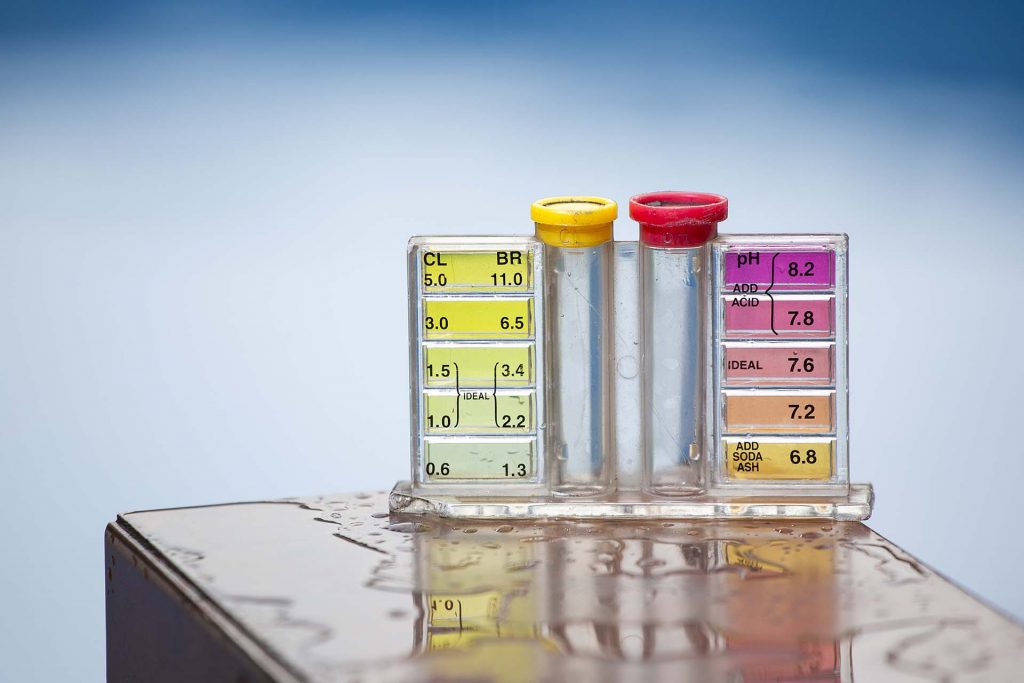
Your pH helps your sanitiser work more effectively, and the alkalinity helps prevent fluctuations in pH. So it is important to adjust this level first. Alkalinity and pH go hand-in-hand, so adjusting one can affect the other. That’s why it’s important to add your chemicals one at a time, wait for them to dissolve, then retest your water. And remember, you can always add more, so don’t overdo it.
✅ Troubleshooting
If both pH and alkalinity are low: Add alkalinity increaser first. Then test the pH again to see if it needs a pH increaser.
If you have Low pH: Add a pH increaser. If your pH is too high, add a pH decreaser. If you have low alkalinity: Add an alkalinity increaser.
If either pH or alkalinity are high: Use pH decreaser to drop them back to the right level. And after adding each chemical, let them circulate for at least 20 minutes, then retest your water.
✅ Step 3
Adjust Sanitiser Levels (Chlorine Or Bromine)
Add your chlorine granules or liquid bromine directly to the water. You can also use bromine tablets in a floating dispenser system. As always, start with a smaller amount of sanitiser, test your water, and then you can add more if necessary.
Bromine does not dissolve as quickly as chlorine, so you’ll need to wait a bit longer before you can retest these levels. If you are using bromine tablets in a floater, this can take several days to disperse in your water before you get a proper reading.
✅ Step 4
Adjust Calcium Hardness Levels
These levels do more damage in the long run, like eroding parts in your spa. So you can wait until your water is sanitised and balanced before adjusting your calcium hardness.
Your calcium hardness levels should be between 175 and 250 ppm. If you need to raise your levels, add a calcium hardness increaser. If your calcium hardness levels are too high, the best solution is to drain your hot tub, scrub it, and start over with fresh, filtered water.
Do You Need To 'Shock' A Spa?
You can use a chlorine shock if you’re experiencing issues with your water, like cloudy water or algae, or if your spa is in high use. You can also add a non-chlorine shock once a week when your spa is in use. This will help refresh your sanitiser levels. Remember to wait 8-12 hours before using your spa after shocking it!
For any further questions or advice about your spa and what chemicals to use, please reach out to our friendly team at Barrier Reef Pools, as suppliers of fibreglass spas we will be more than happy to help!
Do I really need chemicals in my spa if the water looks clean?
Yes. Even clear spa water can contain bacteria, algae, and biofilm that you can’t see or smell. Without proper sanitising and balanced water chemistry, a spa can quickly become unsafe. Chemicals like chlorine or bromine keep the water clean, while pH and alkalinity balance help those sanitisers work effectively and protect your spa equipment.
What order should I add spa chemicals in?
The order matters to prevent water problems and wasted chemicals. Start by testing your water, then add chemicals one at a time in this sequence:
Metal sequestrant (if your water contains metals)
Adjust alkalinity and pH
Add sanitiser (chlorine or bromine)
Adjust calcium hardness if needed
Always wait at least 20 minutes between chemicals, keep jets running, and retest before adding more.
When should I shock my spa, and how often?
You should shock your spa if the water becomes cloudy, smells unpleasant, or after heavy use. A non-chlorine shock can be used weekly during regular use to refresh sanitiser levels, while a chlorine shock is best for solving water issues like algae. After shocking, wait 8–12 hours before using your spa.