
The Most Common Frequently Asked Questions About Small Fibreglass Pools

When you have a swimming pool in your backyard, you have a place that inspires you to exercise and be physically active. Swimming is also a great low-impact activity for older family members or anyone recovering from injury.
Even if you’re investing in a small fibreglass pool, it’s still a significant purchase—so it makes sense to do your research first. Below are the most common questions homeowners ask when considering a small pool for a smaller backyard.
1. What is a small pool?
The definition of a small pool can vary. In general, any pool that has a length of fewer than 7 metres and a width of fewer than 3.5 metres is considered a small pool. In many cases, small pools are around 1.2 metres deep.
If you go for a lap pool, it might not feel “small” in length, but it’s long and narrow—so it can still fit into backyards with limited space (lap pools are often around 1.5 metres deep).
Our small pools vary from 2.9m to 7.0m long—you can explore options here: Small Pools.
2. What is a fibreglass pool and how is it manufactured?
Fibreglass pools are manufactured in a factory using multiple layers of materials that are applied to a mould and left to cure. These layers typically include:
- Gel coat – creates a smooth, durable surface finish
- Chopped fibreglass – adds strength to the shell
- Vinyl ester resin layer – supports corrosion resistance and waterproofing qualities
- Roving layer – helps reduce stress through the structure
- Structural honeycomb/comb layer – adds support at tension points
After curing, the mould is removed and the shell is trimmed to specification. With each layer, the shell becomes stronger, and the end result is extremely durable and flexible.
You can see the process Barrier Reef Pools uses here: Pool Production Process.
3. How is a small pool different?
If you have a small backyard, you may consider a small pool like a plunge pool. Traditional small fibreglass pools are often of gradual depth, while many plunge pools are a consistent depth (meaning you “get to the deep end” quickly). In many plunge pool designs, the deeper section can be around shoulder height.
4. Is a fibreglass pool durable?
Some people assume fibreglass pools are delicate, but fibreglass shells are engineered with multiple structural layers, giving them excellent strength and durability. Because fibreglass is also more flexible than some other pool types, the risk of cracking is reduced.
With proper maintenance, small fibreglass pools can last for decades—you may need surface refinishing (like the gel coat) after a long period of time.
Related reading: How Long Do Fibreglass Pools Last?
5. Why should you go for a small pool?
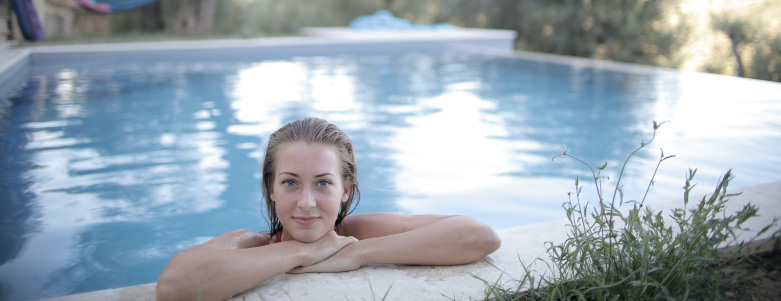
As block sizes continue to shrink, small fibreglass pools have become more popular. You don’t need a huge backyard to enjoy a pool—you just need a design that matches your space and how you plan to use it.
Common benefits of small fibreglass pools include:
- Cheaper accessories (covers, cleaners, etc.)
- Ideal for heating (smaller water volume heats faster)
- Uses less water (better for finances and the environment)
- Consumes less power (circulation can be more efficient)
- Requires fewer chemicals
- Economical fencing and paving (often less perimeter/area than larger builds)
- More backyard space for other features (deck, landscaping, entertaining area)
- Can still include quality features (lighting, seating, water features, etc.)
- Many small pools have bench seating—pairing this with options like spa jets can create a spa-like experience
6. Can you exercise in a small fibreglass pool?
Yes. Even though small pools have less space, you can still exercise in them. For example, a plunge pool with consistent depth can work well for low-impact aerobics and underwater fitness. The water’s buoyancy can reduce pressure on joints and muscles, and water resistance can help you get a solid workout.
7. Will installing a small fibreglass pool be cheaper?
In many cases, yes—but usually not by as much as people expect. A smaller pool often requires less excavation, but installers still need similar equipment and site preparation. The shell is also still a premium, engineered product—so while there can be savings, they may not be drastic.
8. Can you install a small pool above ground?
Yes—small fibreglass pools can be installed above ground or partially above ground. This can be especially helpful if your yard is sloping or has an awkward layout.
More detail here: Can Fibreglass Pools Be Installed Above Ground?
9. Is a fibreglass pool affected by the change in climate?
Fibreglass pools are designed to handle a wide range of climates. Temperature changes don’t typically “damage” the shell, and sunlight shouldn’t cause the finish to fade under normal conditions. Fibreglass shells are also designed to tolerate common pool chemicals and are widely used across regions with very different weather conditions.

10. Do small pools have fewer running costs?
Generally, yes. Because the water volume is lower, circulation can take less time—meaning your pump may not need to run as long (and the pump is often the biggest energy consumer of pool equipment). Heating can be faster and more cost-effective, and you’ll typically use fewer chemicals and spend less time cleaning.
If you use a robotic/automatic cleaner, it may also run for less time due to the smaller surface area.
11. Does a fibreglass pool float up?
A fibreglass pool can float if groundwater pressure builds up around the shell and the installation doesn’t properly manage drainage. One common prevention method is installing a sump pipe to monitor and remove groundwater where required—this helps reduce the risk of “floating” issues.
12. Can you use salt water for your fibreglass pool?
Yes—a saltwater system can be an ideal choice for a small fibreglass pool. Saltwater systems are commonly used with fibreglass surfaces and can provide a comfortable swimming experience with clean, fresh-feeling water.
Learn more here: The Many Benefits of a Saltwater Pool
13. How long does a small fibreglass pool installation take?
A fibreglass pool shell arrives pre-built, which can speed up installation compared to some other pool types. Depending on permits, site access, and weather, installation time can vary—often ranging from about 7 days to 3 weeks.
14. How can you know if a small fibreglass pool is the right choice for you?
Start by thinking about how you’ll use your pool. If you want to host big pool parties regularly, a small pool may feel limiting. But if you’re mainly after a pool to soak, relax, cool off, and do light exercise, a small fibreglass pool can be the perfect fit—especially in compact backyards.
Conclusion
Small fibreglass pools can be a smart, practical option for smaller blocks—often offering lower running costs, faster heating, and flexible design choices. If you’re choosing between designs, focus on how you’ll use the pool day-to-day and what layout best suits your space.
Ready to turn a small backyard into a big lifestyle upgrade? Talk to the Barrier Reef Pools team today to get expert advice on the best small fibreglass pool for your space. We’ll help you compare designs, plan your install, and provide a fast, no-obligation quote—so you can take the next step with confidence. Contact us to get started.